
Air purifier vs humidifier: Which Is Best for Sleep and Allergies
When you're trying to figure out the air purifier vs humidifier puzzle, it boils down to one simple idea: one cleans the air, while the other adds moisture to it. An air purifier is designed to trap and remove airborne annoyances like dust, pollen, and pet dander. A humidifier, on the other hand, releases a fine water vapor to combat dryness.
Defining Your Bedroom Air Quality Goals
Picking the right device for your sleep sanctuary means knowing what problem you’re actually trying to solve. Are you sneezing all night because of allergies, or do you wake up with a painfully scratchy throat? The answer tells you whether you need to filter out pollutants or add some humidity back into your room.
Think of it this way: one is a microscopic net, and the other is a gentle sprinkler system for your personal atmosphere. An air purifier is all about health protection—it actively removes the triggers that can set off asthma or allergy attacks. A humidifier is purely about comfort, soothing the dryness that irritates your skin, nose, and throat, especially when the winter heating is cranked up.
Key Functional Differences
To make the choice crystal clear, let's get into what each one does best and where it shines.
The decision isn't about which device is superior, but which one directly addresses your home's specific air quality issue. For some, the ideal solution involves using both to create a perfectly balanced and clean environment.
To help you see the difference at a glance, we've put together a quick comparison table. It breaks down the main job, key benefit, and best-use scenario for each device.
Quick Comparison Air Purifier vs Humidifier
| Feature | Air Purifier | Humidifier |
|---|---|---|
| Primary Function | Removes airborne contaminants (dust, pollen, smoke, dander) | Adds moisture (water vapor) to the air |
| Main Benefit | Reduces allergens and pollutants, improving respiratory health | Soothes dry skin, sinuses, and throat; reduces static |
| Ideal Use Case | For allergy sufferers, pet owners, or homes in polluted areas | For dry climates or during winter when heating dries out the air |
At the end of the day, figuring out if your discomfort is from what's in the air or a lack of moisture is the most critical first step. Once you know that, you're well on your way to a truly restorative night's sleep.
How Each Device Transforms Your Bedroom Air
To really get the difference between an air purifier and a humidifier, you have to look at how they work. While both are designed to make your bedroom air better, they tackle completely different problems with opposite approaches. Think of it this way: one subtracts, the other adds.
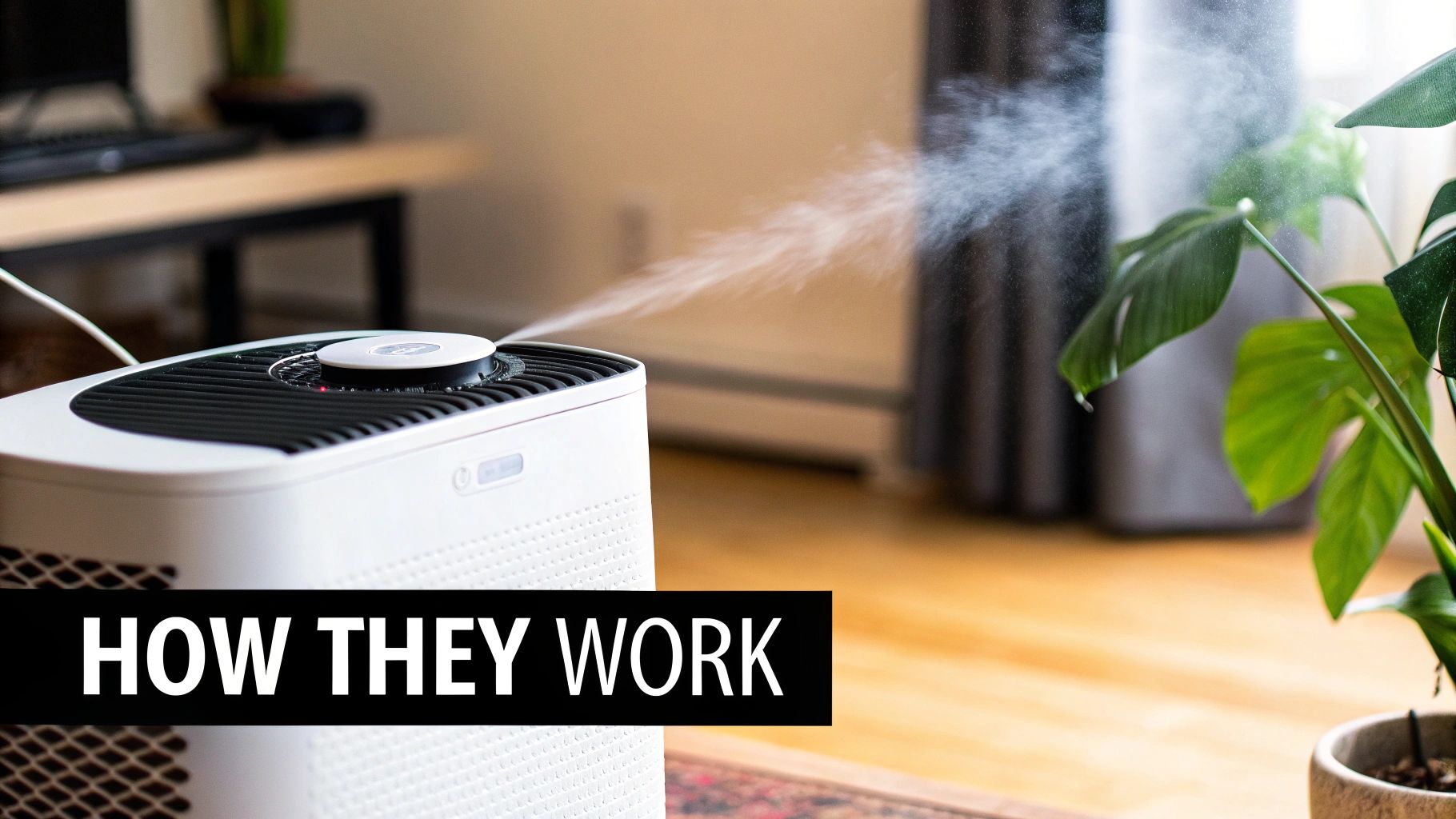
An air purifier is essentially a high-tech net for your air. It uses an internal fan to pull in air from the room and push it through a series of filters. The star of the show is usually a High-Efficiency Particulate Air (HEPA) filter, which is a maze of dense fibers that can trap 99.97% of airborne particles as tiny as 0.3 microns.
This is what makes it so good at neutralizing the things that mess with your sleep.
The Air Purifier’s Filtration Process
An air purifier acts like your bedroom's invisible bodyguard. It works around the clock to trap the microscopic intruders that can set off your allergies or irritate your lungs while you sleep.
Here’s a look at what it’s actually catching:
- Large Particles: A pre-filter grabs the obvious stuff first—think pet hair, lint, and big dust bunnies. This helps the more sensitive filters last longer.
- Microscopic Irritants: The HEPA filter is where the real magic happens, capturing tiny culprits like pollen, dust mites, pet dander, and mold spores.
- Odors and Gases: Many purifiers also have an activated carbon filter, which is great at absorbing smells from cooking, smoke, and those chemical-like odors from new furniture or paint (VOCs).
The end result? The air is genuinely cleaner. An air purifier doesn't make the air warmer, cooler, or more moist—it just scrubs it clean of physical irritants that make you cough, sneeze, or feel congested at night.
The Humidifier’s Hydration Method
A humidifier does the exact opposite. Instead of taking things out of the air, its only job is to put moisture in. Most of the quiet, bedroom-friendly humidifiers you'll find today, including ours at QuietAura, use ultrasonic technology to do this.
Inside an ultrasonic humidifier, a small metal plate vibrates at a frequency you can't hear. This rapid vibration breaks down the water in the tank into a super-fine, cool mist, which is then released into your room.
This isn't just about making the air damp. It's about creating a delicate vapor that raises the overall humidity, making dry air feel softer and much easier to breathe.
This provides a completely different kind of comfort. It won't get rid of allergens, but it directly tackles the scratchy throat, dry nose, and cracked lips that come from dry air, especially in the winter or in arid climates. It can even help quiet snoring that's caused by dryness. For a deeper dive into adding moisture, check out our guide on the diffuser and humidifier for bedroom comfort.
Ultimately, choosing between an air purifier and a humidifier comes down to diagnosing your room's problem. Is the issue what’s floating in your air, or is the air itself just too dry? Figuring that out is the first step to building the perfect sleep sanctuary.
Comparing Health Benefits and Sleep Impact
When you're trying to decide between an air purifier and a humidifier, it really boils down to what problem you're trying to solve. Both can dramatically improve your bedroom's environment for better sleep, but they tackle completely different issues.
Think of it this way: an air purifier cleans the air by removing physical irritants, while a humidifier conditions it by adding moisture back in. One is a defender against allergens, the other is a soother for dryness. Getting this distinction right is the key to a better night's sleep.
Air Purifiers for Allergy and Asthma Relief
If you deal with allergies or asthma, an air purifier is the clear winner. Its whole job is to physically pull airborne triggers out of the air before they can cause respiratory issues. By trapping these microscopic particles, it directly reduces the irritants that lead to nighttime coughing, sneezing, and congestion.
A quality purifier with a HEPA filter is designed to capture the exact things that ruin sleep for so many people:
- Pollen that sneaks in through open windows and triggers seasonal allergies.
- Pet dander from the furry family members we love to have around.
- Dust mites, those tiny pests that love bedding and carpets.
- Mold spores that can circulate in rooms with even a little excess moisture.
By constantly filtering these particles while you sleep, an air purifier prevents your body's allergic response from ever kicking into high gear. This means clearer airways, less irritation, and a much more peaceful, uninterrupted night.
An air purifier is proactive. It doesn't just manage symptoms—it removes the triggers from your environment entirely, creating a genuinely healthier space for you to breathe.
This focus on removing pollutants is why air purifiers have become such a powerhouse in the home wellness market. In 2025, the global air purifier market was valued at USD 18.34 billion, which is nearly 3.5 times larger than the humidifier market. This gap shows a massive consumer shift toward cleaning indoor air as a core health strategy, a trend you can explore deeper in the full market analysis on Precedence Research.
Humidifiers for Soothing Dryness and Congestion
On the other hand, a humidifier provides relief by fighting the effects of dry air. It doesn't remove anything from the air; instead, it adds a fine, cool mist of water vapor to raise the humidity. This simple function can be a game-changer for a different set of health concerns.
Keeping your room's humidity between 30% and 50% is the sweet spot for soothing irritated nasal passages and a scratchy throat. This is a lifesaver in the winter when indoor heating blasts all the moisture out of the air. If you're dealing with a cold or the flu, a humidifier can help ease congestion by keeping your sinuses moist, making it much easier to breathe.
That extra moisture also helps your skin, preventing the dryness and itchiness that can keep you tossing and turning. By creating a more comfortable and less abrasive environment, a humidifier helps your body relax into a deep, restful sleep. You can learn more about how this works by reading our article on the top benefits of using a humidifier in your bedroom.
Detailed Feature Comparison for Home Wellness
To make the choice even clearer, let's put these two devices head-to-head. Seeing their attributes side-by-side really highlights how their different jobs lead to very specific wellness benefits.
| Attribute | Air Purifier | Humidifier | Key Takeaway |
|---|---|---|---|
| Primary Purpose | Removes airborne contaminants like dust, pollen, and smoke. | Adds moisture to the air to increase humidity levels. | Purifiers clean the air; humidifiers condition it. |
| Effect on Allergens | Directly captures and traps allergens, reducing exposure. | Does not remove allergens but can soothe dry nasal passages. | The purifier is the primary tool for allergy sufferers. |
| Relief from Dryness | Has no effect on air moisture levels. | Directly alleviates dry skin, scratchy throat, and chapped lips. | The humidifier is essential for dry air relief. |
| Noise Levels | Varies by model; often produces a consistent fan sound (white noise). | Typically very quiet, especially ultrasonic models like those at QuietAura. | Both can be quiet enough for a bedroom, but ultrasonic humidifiers are often quieter. |
| Maintenance Needs | Requires regular filter replacements (e.g., every 6-12 months). | Needs frequent cleaning (every few days) and use of distilled water. | Humidifiers demand more frequent, hands-on maintenance to prevent mold. |
In the end, your decision comes down to your personal health needs and your home’s specific environment. If airborne particles are the villain in your story, an air purifier is the hero you need. But if the air itself just feels harsh and dry, a humidifier will bring the soothing comfort you're looking for.
When to Choose an Air Purifier for Your Bedroom
Figuring out if you need an air purifier or a humidifier is usually pretty simple—it all comes down to diagnosing your bedroom's air. If your sleep is being wrecked by stuff floating in the air, rather than the air being too dry, an air purifier is the clear winner. Think of it as a silent guardian, working through the night to snatch up the microscopic irritants that ruin your rest.
This is especially true for a few common situations many of us deal with. By recognizing these scenarios, you can confidently decide if a purifier is the right tool to upgrade your sleep and help you breathe easier.
You Live in an Urban or High-Pollution Area
City life has its perks, but clean air often isn't one of them. Pollutants from traffic, nearby factories, and construction dust have a nasty habit of sneaking into your home, even when you keep the windows shut. These invisible culprits—fine particulate matter and volatile organic compounds (VOCs)—are known to irritate your respiratory system and can easily disrupt deep, restorative sleep.
An air purifier armed with both a HEPA filter and an activated carbon filter is built for this exact fight. It captures those microscopic pollution particles while the carbon absorbs the nasty gases and odors, leaving you with clean, fresh air to breathe all night long.
Allergies Are Your Main Concern
For anyone who battles allergies, an air purifier isn't just a gadget; it's a lifeline. Seasonal pollen, pesky dust mites, and invisible mold spores are the usual suspects behind the sneezing, coughing, and congestion that make a good night's sleep feel impossible. A purifier steps in and physically removes these allergens from the air before they ever reach you.
An air purifier offers proactive relief by tackling the source of your allergic reactions. It doesn't just manage symptoms—it helps prevent them by creating a sanctuary of clean air.
This decision tree gives you a quick visual guide for choosing based on what's bothering you most, whether it's airborne particles or just plain dryness.
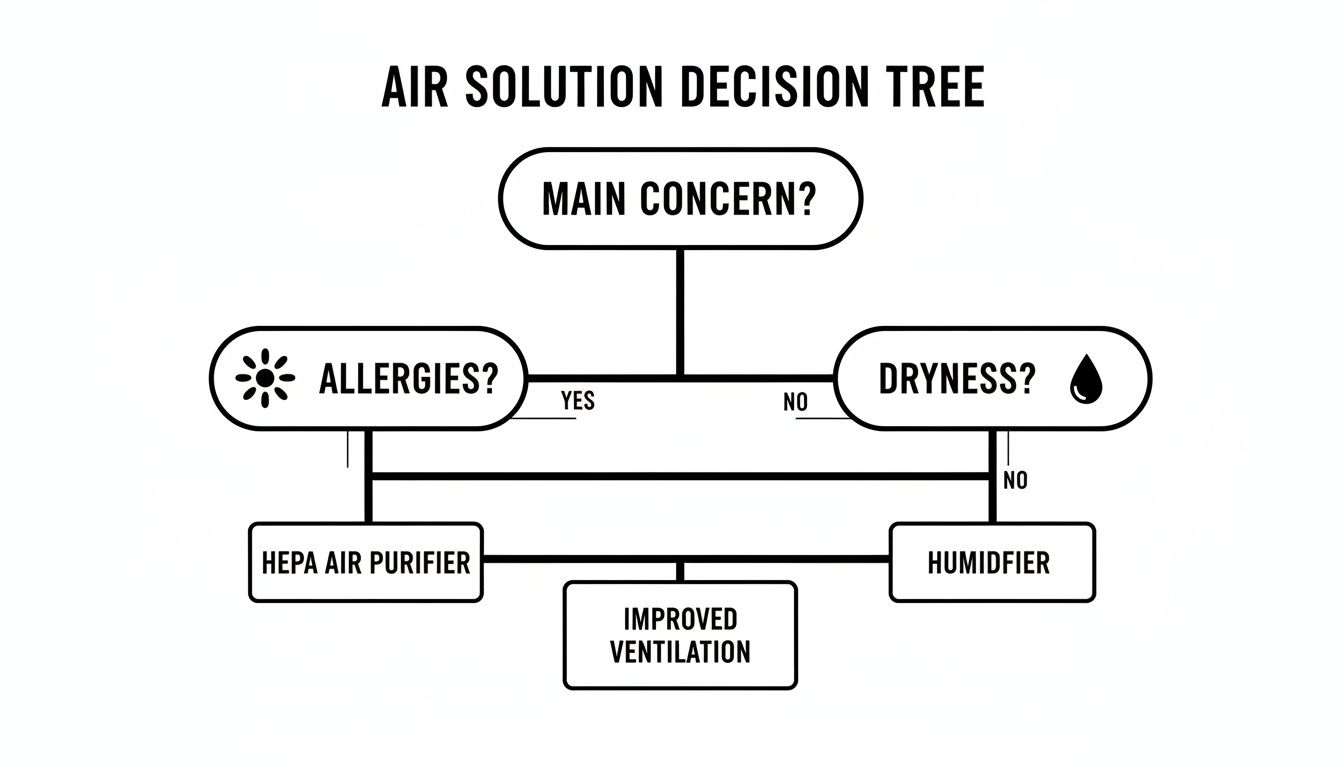
As you can see, if allergies (represented by the pollen icon) are your problem, the path leads straight to an air purifier to get those particles out of your space.
You Share Your Home with Pets
We adore our pets, but let's be honest—they come with dander, hair, and odors. Pet dander, which is just tiny flecks of skin shed by cats, dogs, and other furry or feathered friends, is a major allergen for a lot of people. These particles can float around in the air for hours, triggering reactions long after your pet has left the room.
An air purifier is a game-changer here, trapping that dander and dramatically cutting down your exposure while you sleep. Running one in your bedroom means your immune system can finally stand down, letting you breathe deeper and enjoy uninterrupted rest, even with your furry companion nearby. When particles are the problem, the choice in the air purifier vs humidifier debate becomes crystal clear.
When a Humidifier Is the Right Choice for Rest
While an air purifier is busy scrubbing your air clean, a humidifier tackles a totally different problem to help you sleep: it adds back essential moisture. If you’re waking up with a scratchy throat, dry sinuses, or skin that feels tight and itchy, the issue isn’t what’s in your air—it’s what’s missing.
A humidifier is the clear winner when dryness is the main thing wrecking your rest. It works by releasing a fine, cool mist into your room, gently bringing the humidity up to a much more comfortable level. That simple change can turn a harsh, arid bedroom into a place that actually feels restorative.
Soothing Dry Airways for Deeper Sleep
One of the first things you'll notice with a humidifier is how much it soothes your respiratory passages. Dry air, a common problem in winter when the heat is blasting, can parch your throat and nasal cavities overnight. This is a classic recipe for nighttime coughing, congestion, and even snoring caused by dryness.
By keeping the humidity in that sweet spot—ideally between 30% and 50%—a humidifier keeps those delicate tissues moist. The result? You breathe easier and more quietly all night long, preventing the kind of discomfort that yanks you out of deep, restorative sleep.
A quiet humidifier does more than just make the air feel better. It creates a calm, comfortable atmosphere that sends a powerful signal to your body that it's time to rest deeply. This is a non-negotiable for building a truly sleep-friendly bedroom.
Fighting Dryness in Your Climate or Home
Sometimes, a humidifier is less of a nice-to-have and more of an essential tool. If you recognize any of these situations, there’s a good chance dry air is your primary sleep disruptor.
- You Live in a Dry Climate: For anyone in an arid or high-altitude region, low humidity is a year-round battle that can take a serious toll on sleep quality.
- Winter Heating Dries Your Air: Central heating is a notorious moisture thief, often causing indoor humidity to plummet far below the ideal range.
- You Experience Physical Signs of Dryness: Waking up with chapped lips, a dry nose, or itchy skin are tell-tale signs that your environment is crying out for more moisture. Our detailed guide offers more insight on sleeping with a humidifier if these symptoms sound familiar.
It's no surprise that more and more people are catching on to these benefits. The global humidifier market was valued at USD 5.19 billion in 2025 and is expected to hit USD 5.61 billion by 2026, with residential use leading the charge. The cool-mist segment is especially popular because it's known for being quiet and safe for kids. You can dive into more of these market trends on Fortune Business Insights.
In the air purifier vs humidifier debate, the best choice always circles back to what you personally need. If your bedroom feels abrasive and dry, a humidifier is the targeted fix for adding comfort back into your air and finally getting some peaceful rest.
How to Use Both Devices for a Perfect Sleep Environment
Sometimes, the choice isn't about picking a side in the air purifier vs. humidifier debate—it's about creating a powerful team. For many of us, the ultimate sleep environment requires tackling two separate problems at once: polluted air and dry air.
If you suffer from allergies but also live in a dry climate or deal with harsh winter heating, using both devices is the smartest strategy.
This dual approach means you can pull airborne irritants like pollen and pet dander out of the air while soothing your airways with balanced humidity. The result is a bedroom atmosphere that is both clean and comfortable, hitting potential sleep disruptions from every angle.
Strategic Placement for Optimal Performance
Using an air purifier and a humidifier in the same room is perfectly safe, but where you put them matters. A lot. If they're too close, you can run into problems that make one or both less effective.
The main issue is that the mist from the humidifier can trick the air purifier's sensors into thinking it's particulate matter. This can cause the purifier to ramp up to a higher setting than necessary. Even worse, if the purifier’s filters get damp from prolonged exposure to mist, they can become a breeding ground for mold and lose their filtering power.
To avoid this, follow these simple placement rules:
- Keep Them Separated: Place the air purifier and humidifier on opposite sides of the room. This ensures the purifier is sampling ambient air, not a concentrated cloud of water vapor.
- Think About Airflow: Position the air purifier where it can get good circulation to clean the whole room effectively. The humidifier can go wherever you feel you need the moisture most, like closer to your bed.
- Elevate the Humidifier: Put your humidifier on a dresser or nightstand. This helps the mist disperse into the air instead of settling on the floor or drifting into the purifier's path.
This simple setup lets each device do its job without interference. For more tips on using them together, our article on whether you need both devices in the winter offers some great insights.
Creating a Synergistic Routine
For the best results, think about the order of operations. It’s a great idea to run the air purifier for about an hour before you turn on the humidifier. This ensures you’re adding moisture to air that’s already been scrubbed clean of dust, dander, and other junk.
By purifying first, you guarantee that the humidifier is dispersing clean water vapor into an equally clean environment. This two-step process creates a superior atmosphere that actively supports restorative sleep.
This holistic approach is becoming more common as people realize a single device might not solve all their air quality issues. The market reflects this. While air purifiers are expected to hit USD 18.34 billion in 2025, the humidifier and dehumidifier markets also represent huge investments at USD 5.19 billion and USD 3.64 billion, respectively. You can dig into more of this data in a PR Newswire market report.
Ultimately, combining these two devices allows you to address both air cleanliness and comfort at the same time. By following these practical setup tips, you can transform your bedroom into the ultimate sanctuary for health, rest, and rejuvenation.
Frequently Asked Questions
Diving into the world of home air quality often brings up a few practical questions. When you're weighing an air purifier vs. a humidifier, it’s natural to wonder about daily use, specific health concerns, and how to keep them running smoothly. Here are some clear, straightforward answers to the most common questions we hear.
Can I Run an Air Purifier and Humidifier at the Same Time?
Yes, you absolutely can—and in many cases, you probably should. The two devices perform totally different jobs that complement each other perfectly. The purifier cleans the air of particles, while the humidifier adds essential moisture. Together, they create a much healthier and more comfortable indoor environment.
The trick is getting the placement right. To make sure they work together without getting in each other's way, you should:
- Place the devices on opposite sides of the room.
- This simple step prevents the humidifier's mist from getting the air purifier's filter damp, which could lead to mold.
- It also ensures the purifier's sensors don't mistake the clean water vapor for pollutants, allowing both machines to operate at peak efficiency.
Which Is Better for Allergies?
For anyone dealing with allergies, an air purifier is the clear winner. Its entire job is to capture and trap the very things that make you sneeze and itch—pollen, pet dander, dust mites, and mold spores. By physically pulling these irritants out of the air, it cuts down your exposure and helps stop allergic reactions before they even start.
A humidifier can certainly help soothe allergy symptoms like a scratchy throat or dry, irritated sinuses. But it's important to remember it doesn't actually remove the allergens from the air.
Think of it this way: a humidifier can make allergy symptoms feel less miserable, but an air purifier attacks the root of the problem. For true relief, the purifier is your first and most important line of defense.
How Do I Know if I Need a Humidifier?
Your body is usually the first to tell you. If you consistently notice the physical signs of dry air, it's a good bet that your home needs more moisture.
Keep an eye out for these tell-tale symptoms:
- Waking up with a scratchy throat or a dry, stuffy nose.
- Constantly dealing with dry skin, chapped lips, or itchy eyes.
- Noticing a lot more static electricity zapping you around the house.
If you want a more precise answer, a simple gadget called a hygrometer will measure your home's relative humidity. If it's consistently dipping below the ideal range of 30% to 50%, a humidifier will make a world of difference.
What Is the Most Important Maintenance for a Humidifier?
Hands down, the single most critical task is regular, thorough cleaning. Because humidifiers work with water, they can quickly become a breeding ground for mold and bacteria if you neglect them. The last thing you want is a device that's supposed to help you breathe better actually pumping pollutants into your air.
To keep it safe and effective, clean the water tank every few days, just as the manufacturer recommends. It's also a great idea to use distilled or demineralized water. This prevents that fine, white mineral dust from spraying out and settling on all your furniture.
And if you're curious about running similar wellness devices overnight, we've got some great tips in our guide on sleeping with a diffuser on all night.
At QuietAura, we believe a peaceful night's sleep starts with the perfect environment. Our ultra-quiet humidifiers and diffusers are designed to create a calm, comfortable atmosphere, helping you relax and breathe easier. Explore the collection at https://quietaura.store to find the ideal solution for your sleep sanctuary.
Article created using Outrank