

Best humidifier for bedroom: A Guide to Quiet, Healthier Sleep
For a bedroom, the best humidifier is one that's quiet, keeps the humidity between 40-60%, and isn't a headache to clean. Most people find an ultrasonic model is the perfect fit—it's nearly silent, so it won't disturb your sleep. Our 3L ultrasonic humidifier with dual nozzles is designed specifically for bedrooms, offering whisper-quiet operation and 8+ hours of continuous mist.
Why Your Bedroom Needs the Right Humidity for Great Sleep
Ever wake up with a scratchy throat, a stuffy nose, or that tight, dry feeling in your skin? Your first instinct might be to blame allergies or a coming cold, but often, the real culprit is just overly dry air.
This is a super common problem, especially in homes with central heating or air conditioning running all the time. Think of dry air like a thirsty sponge—it will pull moisture from anywhere it can find it, including your skin and respiratory system. The result? Discomfort that can easily ruin a good night's sleep.
Finding the Sweet Spot for Restful Air
Experts agree that the ideal indoor humidity level is between 40% and 60%. When the air in your room is in this "sweet spot," it just feels better. It helps keep your airways hydrated and can even make a room feel a bit warmer and cozier on a cold night.
When your bedroom's humidity is balanced, you're far less likely to be woken up by annoying issues like:
- A dry, tickly cough: Hydrated airways are happy airways, less prone to irritation.
- Congestion or a stuffy nose: Moist, gentle air can help soothe inflamed nasal passages.
- Itchy, flaky skin: Proper humidity helps your skin hold onto its natural moisture while you sleep.
A lot of people only think about using a humidifier when they're sick. But the real secret is using one consistently to prevent the very symptoms that disrupt deep, restorative sleep in the first place. It's proactive comfort care.
Turn Your Room into a True Sleep Sanctuary
A good bedroom humidifier is like your own personal climate control, turning a dry, harsh environment into a comfortable oasis built for rest. By adding just the right amount of invisible moisture to the air, it solves the root cause of so many nighttime frustrations.
It's a simple change that helps create an environment where your body can truly relax, recover, and recharge overnight. You can dive deeper into the specific benefits of using a humidifier in your bedroom for better sleep in our other guide.
Ultimately, choosing the right humidifier for your bedroom is a direct investment in your nightly wellness. It's one of the most effective tools for anyone looking to stop frustrating wake-ups and start the day feeling genuinely refreshed.
How to Choose the Right Size Humidifier for Your Bedroom
When it comes to picking the right humidifier, "size" isn't about how much space it takes up on your nightstand. It's all about its water tank capacity and how long it can run before needing a refill. Think of it like a car's fuel tank—a bigger one gets you farther. For your bedroom, the goal is simple: find a humidifier that can run all night long, giving you 8+ hours of uninterrupted, soothing mist.
A unit that's too small will sputter out halfway through the night, failing to keep the room at that ideal 40-60% humidity level. But going too big for a tiny room can backfire, too. An overpowered humidifier can leave you with condensation on the windows and a damp, clammy feeling. The sweet spot is all about balance.
Matching Tank Size to Your Bedroom
First things first, you need a rough idea of your room's size. Just multiply its length by its width to get the square footage. With that number, you can find a model built to handle your space without breaking a sweat.
Getting this right is the first step in turning dry, stuffy air into the perfect environment for deep sleep.
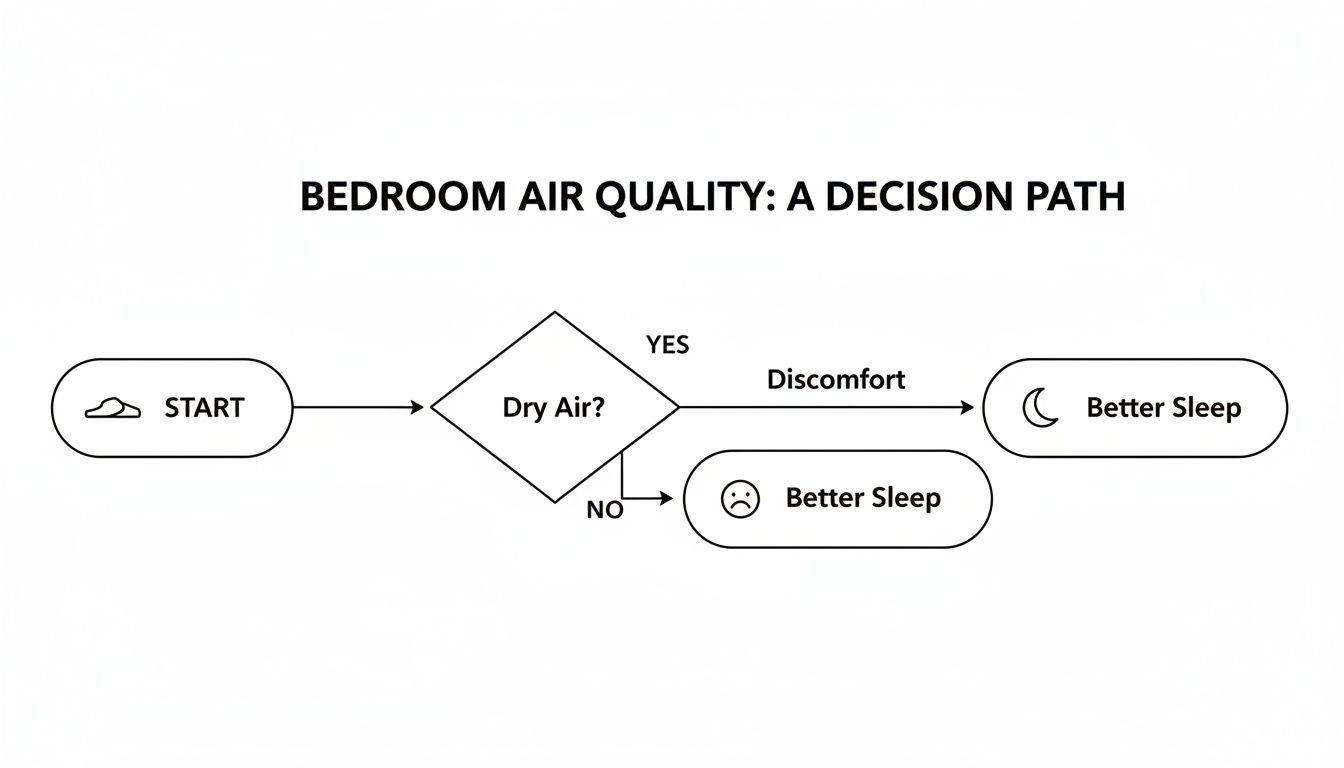
This flowchart shows just how direct the path is from noticing dry air to creating the kind of comfort that helps you rest better. It's a simple fix with a big impact on your night.
And people are catching on. The home humidifier market is booming, with the residential sector making up a massive 69.11% of all sales. Portable, table-top units are leading the charge, capturing 61.37% of the market as more and more of us look for easy, room-by-room solutions.
Finding Your Ideal Match
To make things even easier, we put together a quick guide to help you match your bedroom size with the right tank capacity. This ensures you get a machine that works efficiently all night long. If your space is on the cozier side, be sure to check out our guide on the best small bedroom humidifier options.
Humidifier Sizing Guide for Your Bedroom
Match your bedroom size to the ideal tank capacity and runtime for uninterrupted, all-night comfort.
| Bedroom Size (sq. ft.) | Recommended Tank Capacity | Typical Runtime |
|---|---|---|
| Small Bedroom (Up to 250 sq. ft.) | 0.5 - 1 gallon (2-4 liters) | 8-12 hours |
| Medium Bedroom (250-400 sq. ft.) | 1 - 1.5 gallons (4-6 liters) | 12-24 hours |
| Large Bedroom (400+ sq. ft.) | 1.5+ gallons (6+ liters) | 24+ hours |
Choosing the right size means you won't be stumbling to the sink for a refill in the middle of the night. It just works. For medium to large bedrooms, our 3L ultrasonic humidifier provides excellent coverage with 12+ hours of runtime.
Pro Tip: When in doubt, go for a slightly larger tank. It's much quieter and more efficient to run a larger humidifier on a low setting than to blast a small one on high all night long.
Ultimately, the best humidifier is one you can set and forget. By picking the right size from the start, you're setting yourself up for consistent, hassle-free comfort that helps you sleep deeply from dusk until dawn.
Ultrasonic vs Evaporative Humidifiers: Which Is Best for Sleep?
When you start shopping for a bedroom humidifier, you'll quickly run into two main types: ultrasonic and evaporative. They both get the job done—adding moisture back into your air—but they go about it in completely different ways. Knowing the difference is the key to picking the right one for a good night's sleep.
Think of an ultrasonic humidifier as a tiny, silent fog machine for your nightstand. It uses a small metal plate that vibrates at a frequency so high you can't hear it. These vibrations instantly turn water into a fine, cool mist that it gently puffs into your room. It's high-tech and incredibly quiet.
An evaporative humidifier, on the other hand, works a lot more like nature. It has a wick filter that soaks up water from the tank, and a fan blows air across it. As the air passes through, it picks up moisture and circulates it around the room, much like a breeze blowing over a lake.
The Deciding Factor For Sleep: Noise Level
For most of us, especially light sleepers, the choice really boils down to one thing: sound. The best humidifier for your bedroom is the one you can't hear.
This is where ultrasonic models really shine. Since they don't rely on fans, their operation is almost completely silent. The only sound you might ever notice is a soft, occasional gurgle as water moves from the tank. This makes them the clear winner for creating a peaceful, interruption-free sleep sanctuary. Our USB mini humidifier with LED night light is perfect for smaller spaces or personal desk use with zero noise disturbance.
The core principle of a good sleep environment is the removal of disruptions. An ultrasonic humidifier's near-silent performance means it adds comfort without adding noise, making it the superior choice for a bedroom setting where tranquility is paramount.
Evaporative models need a fan to work, plain and simple. While many modern units are designed to be quiet, there will always be a low, constant hum. For some people, this acts as a nice white noise machine. But for others, it's just enough background noise to keep them from drifting off.
Comparing Mist And Maintenance
Beyond the sound, you'll also want to think about the mist itself and how much upkeep is involved. Each type has its own pros and cons here.
Ultrasonic Humidifiers:
- Visible Mist: They produce a cool, visible stream of mist, which many people find calming and reassuring to see.
- No Filters: Most models are filter-free, which means you'll never have to spend money on replacements. Zero ongoing costs.
- Mineral Dust: Here's the one catch. If you use hard tap water, the minerals can get released with the mist and settle as a fine "white dust." The fix is simple: using distilled or demineralized water eliminates this problem entirely.
Evaporative Humidifiers:
- Invisible Moisture: The moisture they release is a pure vapor, so you won't actually see any mist coming out of the machine.
- Self-Regulating: These are less likely to over-humidify a room. The air will naturally only absorb as much moisture as it can hold.
- Filter Maintenance: That wick filter is great at trapping minerals (so no white dust), but it also needs to be cleaned or replaced regularly. If you don't, it can become a breeding ground for mold and bacteria.
For a deeper dive into different mist types, our ultimate 2025 buying guide for the best cool mist humidifiers offers more detail.
When it comes down to it, the ultrasonic model's silent operation gives it a massive advantage for bedroom use. It creates that serene, quiet atmosphere you need for truly restorative rest.
What Makes a Great Bedroom Humidifier?
It's the little things. Beyond just putting moisture into the air, the right features can turn a simple appliance into a key part of your nightly wind-down. When you're looking for the best humidifier for your bedroom, it's these thoughtful details that make all the difference. They work together to create an environment that's not just comfortable, but also safe, convenient, and genuinely relaxing.
And people are catching on. The U.S. humidifier market is already worth USD 2.15 billion and is expected to more than double by 2034. A huge part of that growth comes from portable models perfect for bedrooms, making high-end features more accessible than ever. You can dig into the U.S. humidifiers market trends to see what's driving this demand.
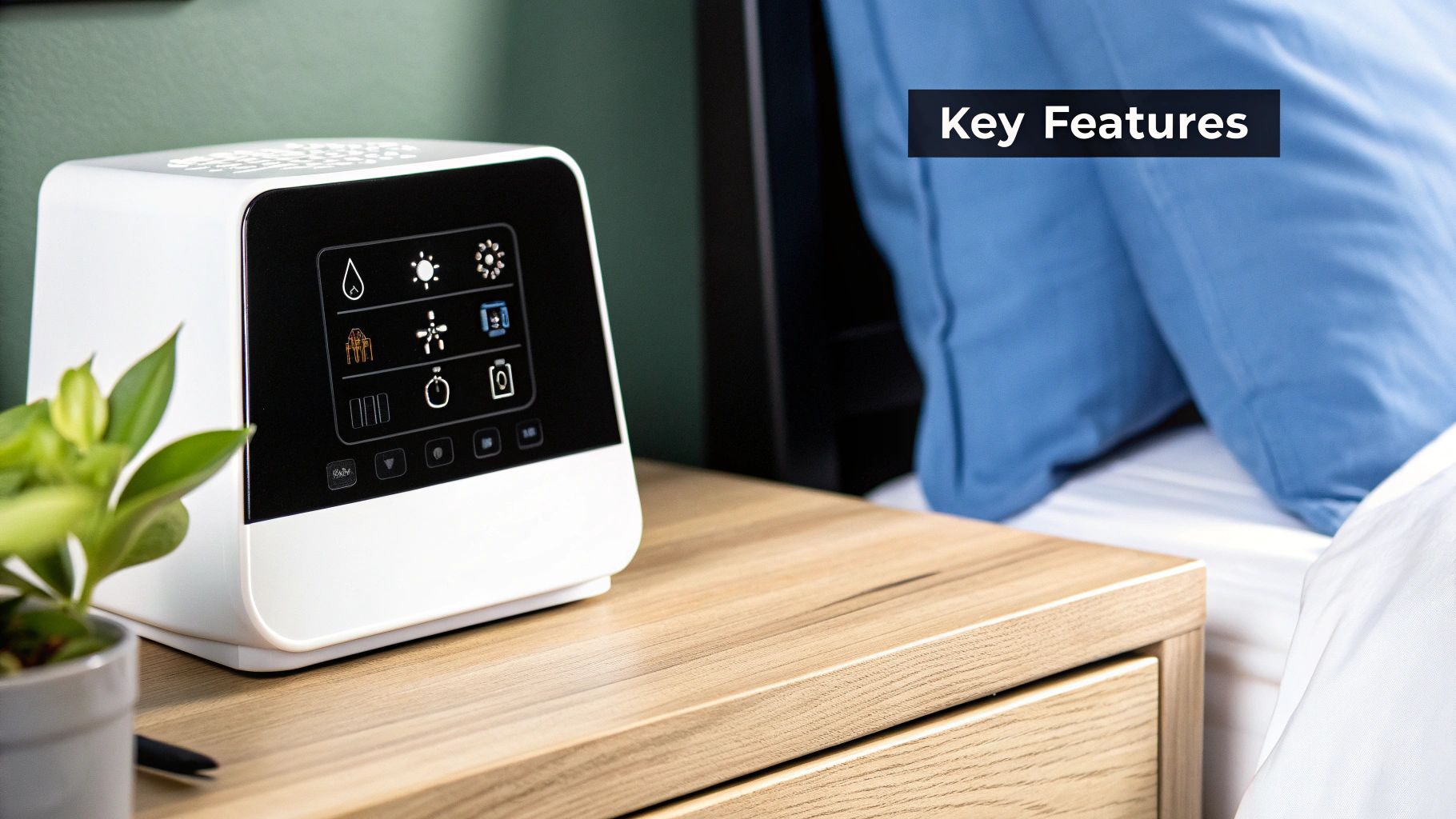
Safety and Smart Operation
First things first: any appliance running while you sleep needs to be safe. An auto-shutoff function is completely non-negotiable here. This is a basic safety mechanism that kills the power when the water tank runs dry, preventing the motor from burning out and giving you total peace of mind.
Another game-changer is a built-in hygrometer, which is just a fancy name for a humidity sensor. This lets the humidifier run in "auto mode," working a lot like a smart thermostat for your air's moisture.
- Set It and Forget It: You can program it to maintain that perfect 40-60% humidity sweet spot.
- No More Dampness: It intelligently cycles the mist on and off to stop the room from feeling clammy or overly damp.
- Effortless Comfort: You get consistently perfect air quality without having to fiddle with settings all night.
This kind of smart tech takes all the guesswork out of the equation. Our premium ultrasonic humidifier features both auto-shutoff and adjustable mist settings for worry-free operation.
A humidifier with a hygrometer works quietly in the background, making tiny adjustments so you don't have to. You just set your ideal level and let it handle the rest, letting you focus on what matters—sleep.
Wellness and Ambiance Enhancements
Modern humidifiers aren't just about air quality anymore; they're designed to create a full-on sleep sanctuary. Many of the best models now include features to soothe your senses as you get ready for bed.
An aromatherapy tray is a great example. It's a small, dedicated compartment where you can add a few drops of essential oils like lavender or chamomile. The humidifier then gently infuses the mist with the scent, filling your room with a calming aroma that tells your brain it's time to switch off. Our sleep diffuser with aromatherapy essential oils is specifically designed for this purpose, combining humidification with soothing scents.
Finally, keep an eye out for adjustable ambient lighting. The best humidifiers for bedrooms often have soft, warm LED lights that you can dim or turn off completely. This gentle glow can act as a subtle nightlight without the harsh, sleep-disrupting blue light that so many electronics blast out. Consider pairing your humidifier with our galaxy projector night light for the ultimate relaxation experience.
Designing Your Ultimate Sleep Sanctuary
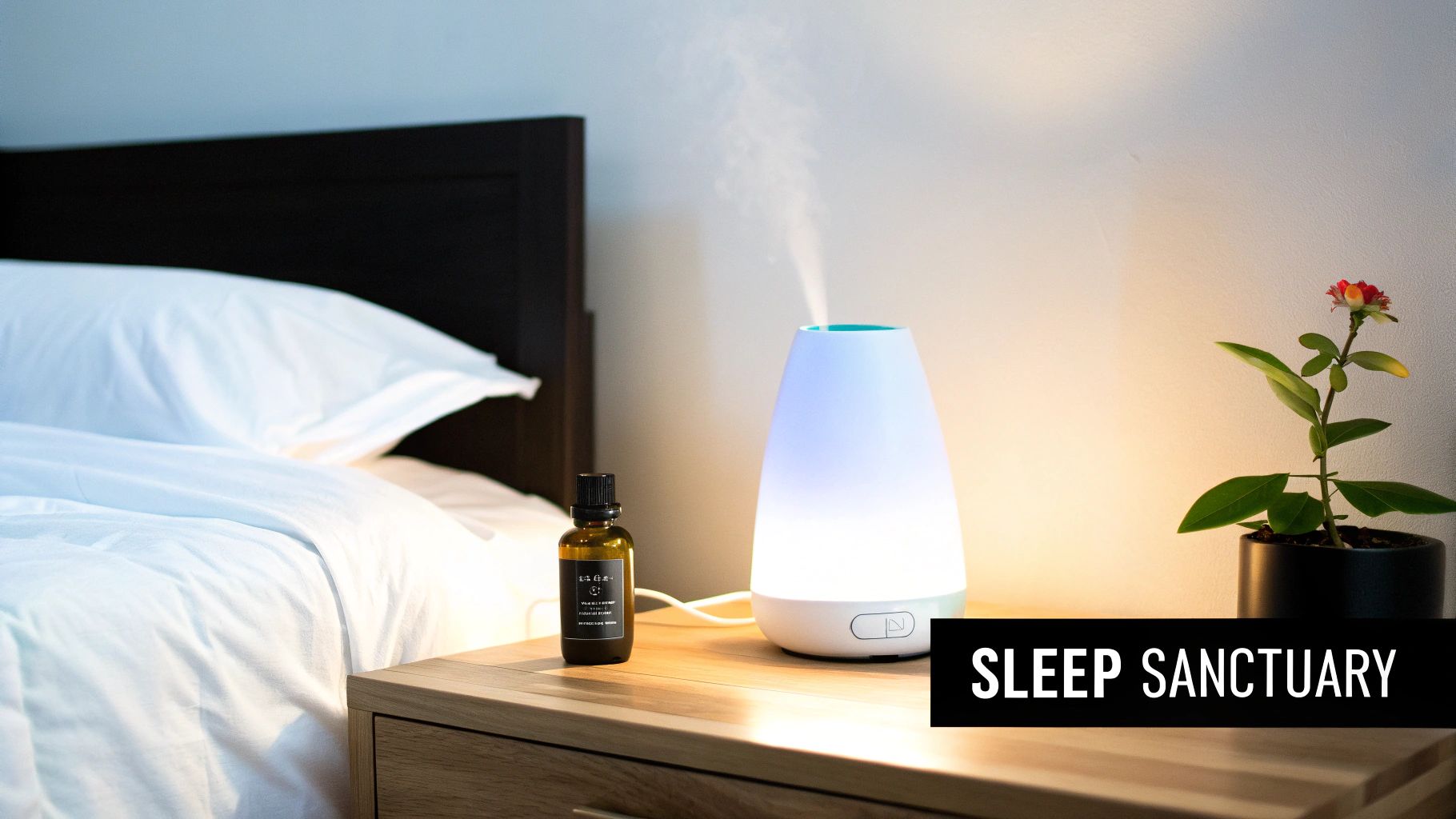
Turning your bedroom into a true sleep sanctuary is about more than just adding a little moisture to the air. It's about creating a complete sensory experience that tells your brain it's time to switch off and sink into deep, restorative rest.
The right humidifier is the centerpiece of this environment. But where you put it and what you pair it with is what really unlocks its full potential.
Strategic Humidifier Placement
Getting the placement right is the first step. Think of the mist as a gentle, localized cloud of comfort. You want it close enough to feel the benefits but not so close that your sheets end up feeling damp.
Find a flat, water-resistant surface like a nightstand or dresser, ideally about two to three feet away from your bed. This gives the mist enough space to disperse evenly into your breathing zone without overwhelming you.
It's also crucial to keep the unit at least one foot away from walls and any electronics. Over time, that fine mist can be tough on wood finishes or sensitive circuits, so a little breathing room goes a long way. For compact spaces, our USB mini humidifier fits perfectly on any nightstand without taking up valuable space.
Your humidifier is like a personal climate control tool. By placing it correctly, you create a perfect micro-environment around your bed, optimized for comfortable, uninterrupted breathing all night long.
Building Your Wind-Down Ritual
A quality humidifier becomes a powerhouse when you weave it into a nightly wind-down routine. Modern units with built-in aromatherapy and lighting are designed for exactly this—layering sensory cues that gently ease you into a state of total relaxation.
Consider these elements to complete your sleep-enhancing setup:
- Calming Aromatherapy: About 30 minutes before you plan to sleep, add a few drops of lavender or chamomile essential oil to the dedicated aroma tray. Scent is a powerful psychological trigger, signaling to your body that the day is officially over. For more ideas, you can explore our full guide on using humidifiers with essential oils to create a sleep sanctuary. Our flame effect aroma diffuser creates a spa-like ambiance with soothing visual effects.
- Soothing Ambient Light: Ditch the harsh blue light from your phone. Instead, pair the gentle mist with your humidifier's soft, warm ambient light. This serene glow is far less disruptive to your body's natural melatonin production. For late-night reading, try our amber neck reading light that won't disturb your sleep cycle.
- Gentle Sound: The near-silent hum of an ultrasonic model is underrated. It provides a subtle, consistent sound floor that can help mask annoying background noises and lull you into a deeper state of rest.
- Complete Darkness: Pair your humidifier with a 3D blackout sleep mask to block out all light and create the perfect sleep environment.
When you thoughtfully combine these elements, your humidifier goes from a simple appliance to the conductor of your nightly rest orchestra. It's the final piece in designing a personalized haven where you can truly recover, ensuring you wake up feeling refreshed and ready for the day.
Got Questions? We've Got Answers.
Even after you've picked the perfect humidifier, a few practical questions always pop up. Getting these small details right is the secret to making sure your new device delivers clean, comfortable air safely, night after night. Let's tackle some of the most common ones.
How Often Should I Clean My Bedroom Humidifier?
Think of it like any other appliance that handles water—it needs a regular refresh. For clean, healthy mist, plan on cleaning your humidifier at least once a week.
A quick rinse of the tank and a wipe-down with a diluted white vinegar solution is usually all you need to stop mineral gunk and bacteria from setting up camp. This is the single most important habit for keeping the mist pure and your humidifier running smoothly for years. Always peek at the manufacturer's instructions, though, as some parts might need a little extra TLC.
Is It Okay to Run a Humidifier Every Night?
Absolutely. In fact, running it every night is the best way to create a stable, comfortable sleep environment, especially when the winter air is bone-dry or you live in an arid climate. The real trick is to avoid over-humidifying your room.
The sweet spot for bedroom humidity is between 40% and 60%. A model with a built-in hygrometer and an auto-mode is a game-changer for nightly use. It will intelligently shut itself off once it hits that ideal level, so you never have to worry about dampness or condensation.
Consistent use helps your body settle into a healthier rhythm, leading to better sleep over time. If you're curious about the science behind it, here's why you should sleep with a humidifier every night.
Can I Use Essential Oils in Any Humidifier?
This is a big one: no. You should only use essential oils in humidifiers that are specifically designed with an aromatherapy feature, like a separate oil tray or pad.
Pouring oils directly into a standard humidifier's tank can be a disaster. The oils can corrode the plastic and damage the internal parts, which will ruin the unit and almost certainly void your warranty. Models built for aromatherapy keep the oils separate from sensitive components, letting you safely enjoy calming scents like lavender or chamomile without any risk. Check out our aromatherapy-safe diffuser designed specifically for essential oil use.
What Type of Water Is Best for My Humidifier?
For the best performance, distilled or demineralized water is the way to go, especially if you have an ultrasonic model. While tap water works, it's often full of minerals. These minerals can get turned into a fine, white dust that settles on your furniture and, more importantly, gets into the air you breathe.
Switching to purified water has a few key benefits:
- No more white dust, which keeps your air and surfaces cleaner.
- Less mineral buildup inside the machine, making your weekly clean-up a breeze.
- A longer lifespan for your humidifier by protecting its internal parts.
It's a simple change that makes a huge difference in the quality of your mist and the health of your device. If you're dealing with excess moisture in other areas, consider our mini dehumidifier for bedroom to balance humidity levels throughout your home.
Ready to create your perfect sleep sanctuary? The QuietAura collection offers ultra-quiet humidifiers and aromatherapy diffusers designed to help you rest deeper and wake up refreshed. All our products are available with secure PayPal checkout, offering buyer protection and a hassle-free payment experience. Explore our curated selection and start your journey to better sleep tonight. For on-the-go freshness, don't miss our waterless car scent diffuser.
Article created using Outrank
